The map is no longer the same
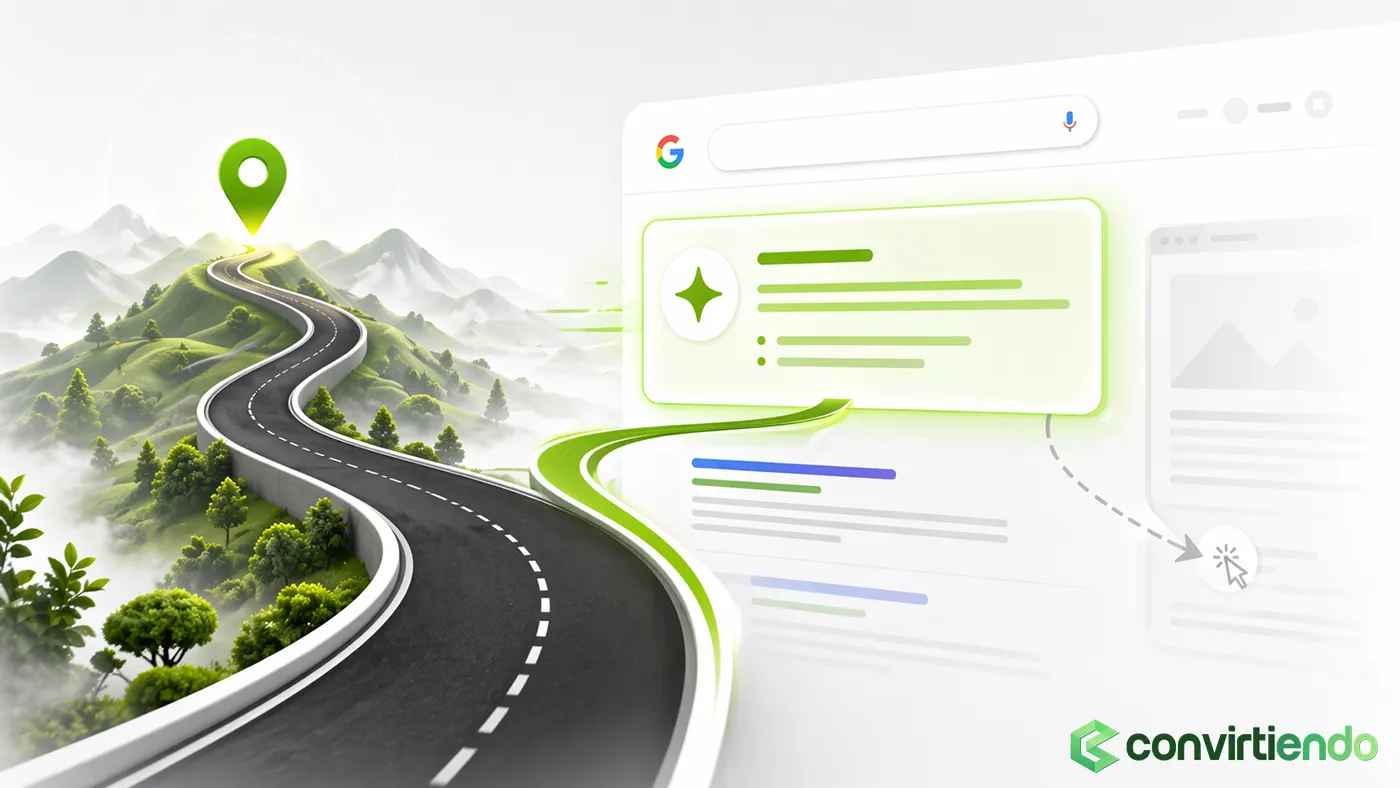
Imagine you’ve been driving around the same city for years and suddenly, without warning, several main streets change direction, a toll motorway is added through the centre, and some traffic lights disappear. The destination is still the same, but the route to get there has completely changed.
That is exactly what is happening with SEO right now.
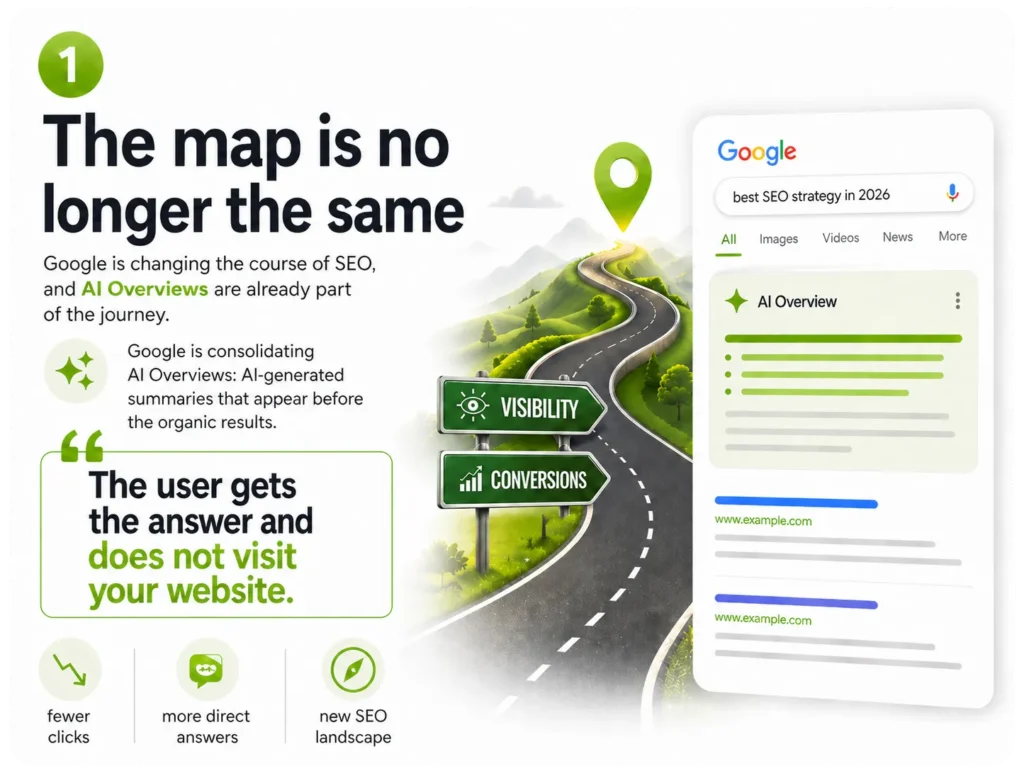
Google has been consolidating a completely new layer in its search results for months: AI Overviews (AI-generated summaries that appear at the top of the page, before any organic results). And what this means for your business in 2026 is more important than you’ve probably been told.
What AI Overviews are and why they matter so much
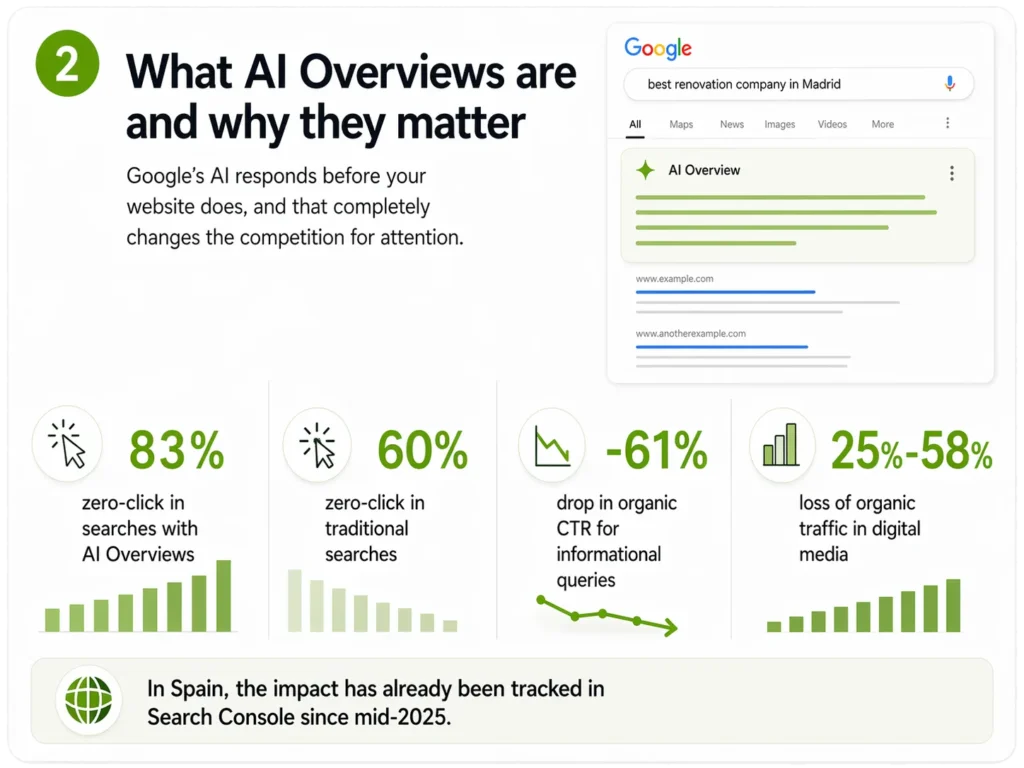
When someone searches on Google, what they now see in many cases is no longer a list of links to websites. The first thing that appears is a block of text generated directly by Google’s AI, answering the question without the user needing to click on any page.
The practical outcome is straightforward: the user gets the answer and doesn’t visit your website.
This has a technical name that no longer sounds like the future, but the present: zero-click searches. And 2026 data confirms that the trend is accelerating:
- Searches that trigger AI Overviews show an 83% zero-click rate, compared to 60% for traditional searches without AI summaries.
- For informational queries, organic CTR drops reach up to 61% according to recent 2026 analyses.
- Global digital media have lost between 25% and 58% of their organic traffic from Google over the past two years, with informational content sectors being the most affected.
- In Spain, the impact has been trackable in Google Search Console since mid-2025: if you’re maintaining strong rankings but your clicks have dropped, AI Overviews are already influencing your searches.
That said, there’s an important nuance you need to understand before panicking.
The good news: not all searches are affected in the same way
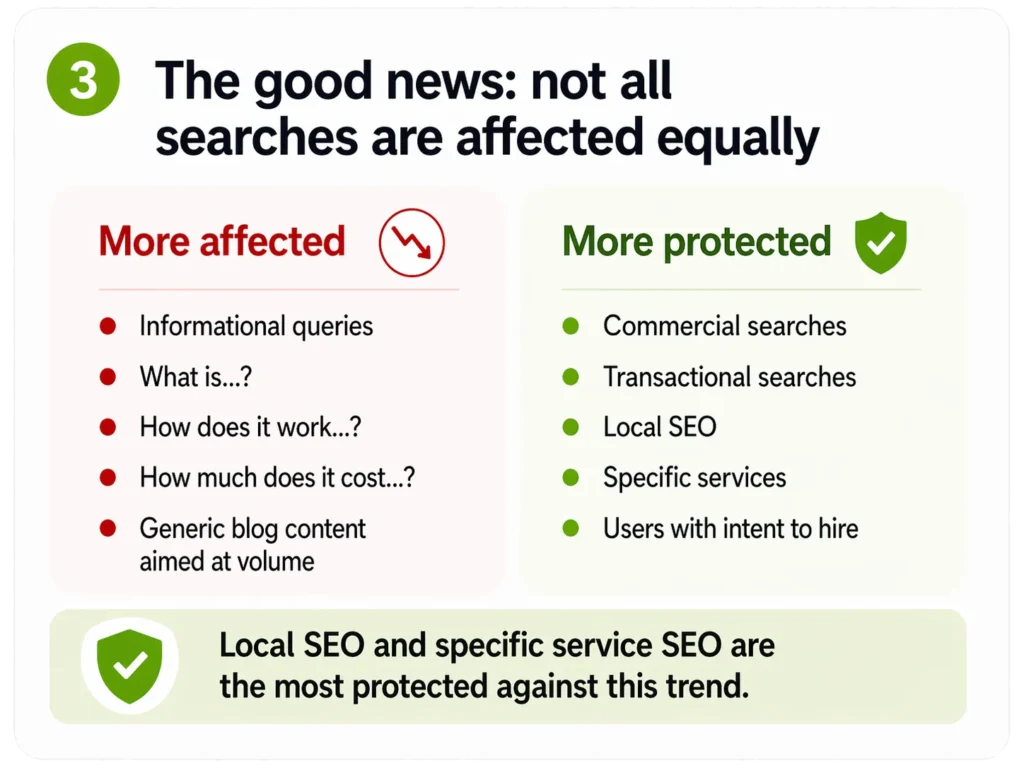
AI Overviews do not appear in every search. They follow a very clear pattern: they are mainly triggered by informational queries (questions such as “what is…?”, “how does it work…?”, “how much does it cost…?”).
On the other hand, commercial and transactional searches — meaning those from users who are already ready to buy or hire — are far less likely to generate an AI Overview.
And what does that mean for your business?
If your SEO strategy was based on attracting informational traffic (generic blog posts, long-form guides on broad topics), that’s where you’ll feel the biggest impact.
However, if your content is focused on capturing users who already know what they want and are searching for the best provider in their area or sector, that traffic holds up much better.
Local SEO and service-based SEO are currently the most protected against this trend.
What is no longer working (and what still works)
What no longer delivers the same results
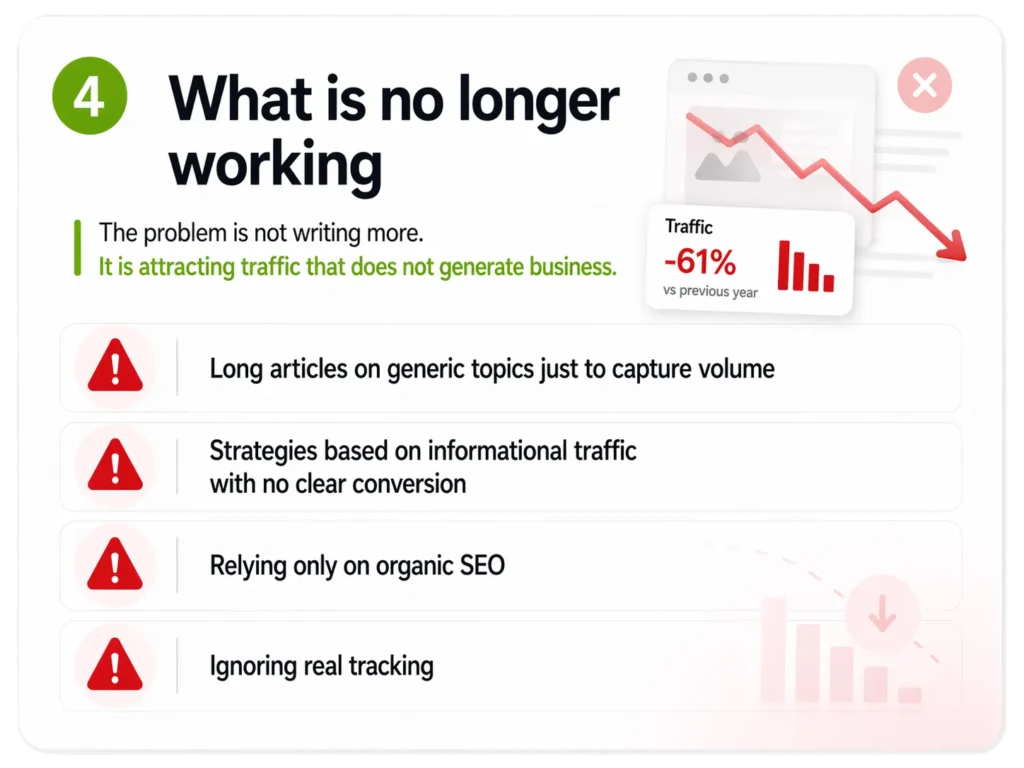
- Long articles on generic topics created purely to rank for search volume
- Strategies based on accumulating informational traffic without a clear conversion path
- Relying exclusively on organic SEO as your only visibility channel
- Ignoring proper tracking: if you don’t know how many leads you’re actually getting and where they come from, you’re making decisions blindly
What still works — and increasingly so
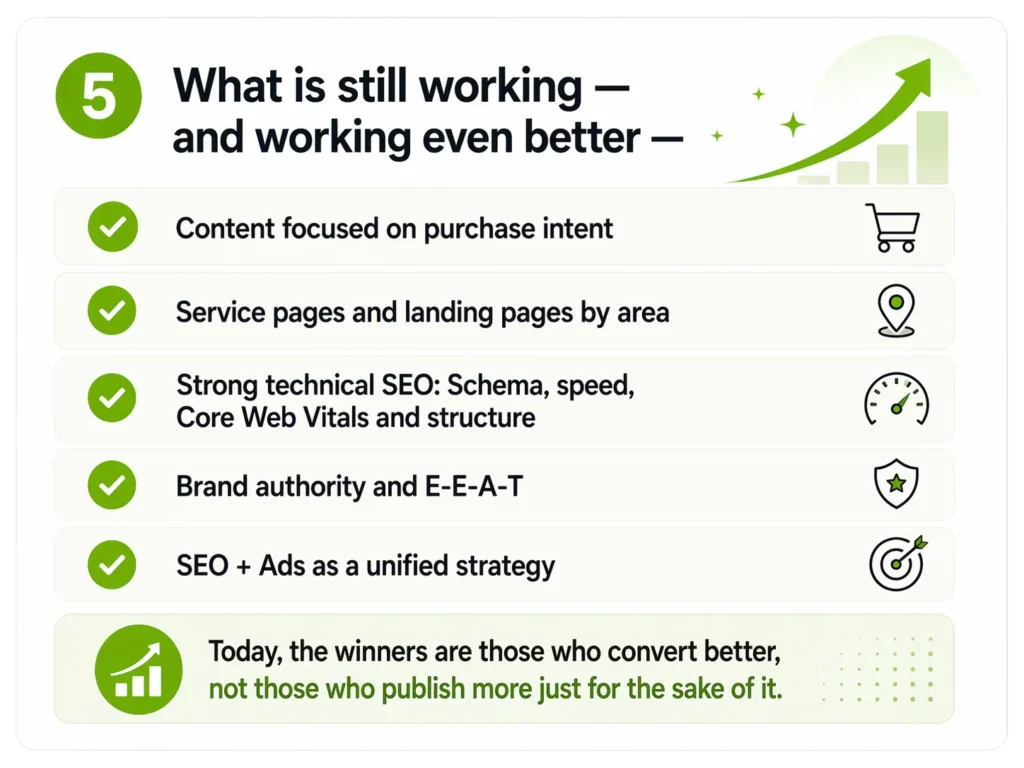
- Content focused on purchase intent: well-developed service pages, landing pages by service type and geographical area, and content that directly answers someone ready to hire
- Strong technical SEO: Schema Markup, page speed, Core Web Vitals, well-structured internal linking. Google still rewards websites that make content easy for its systems to understand
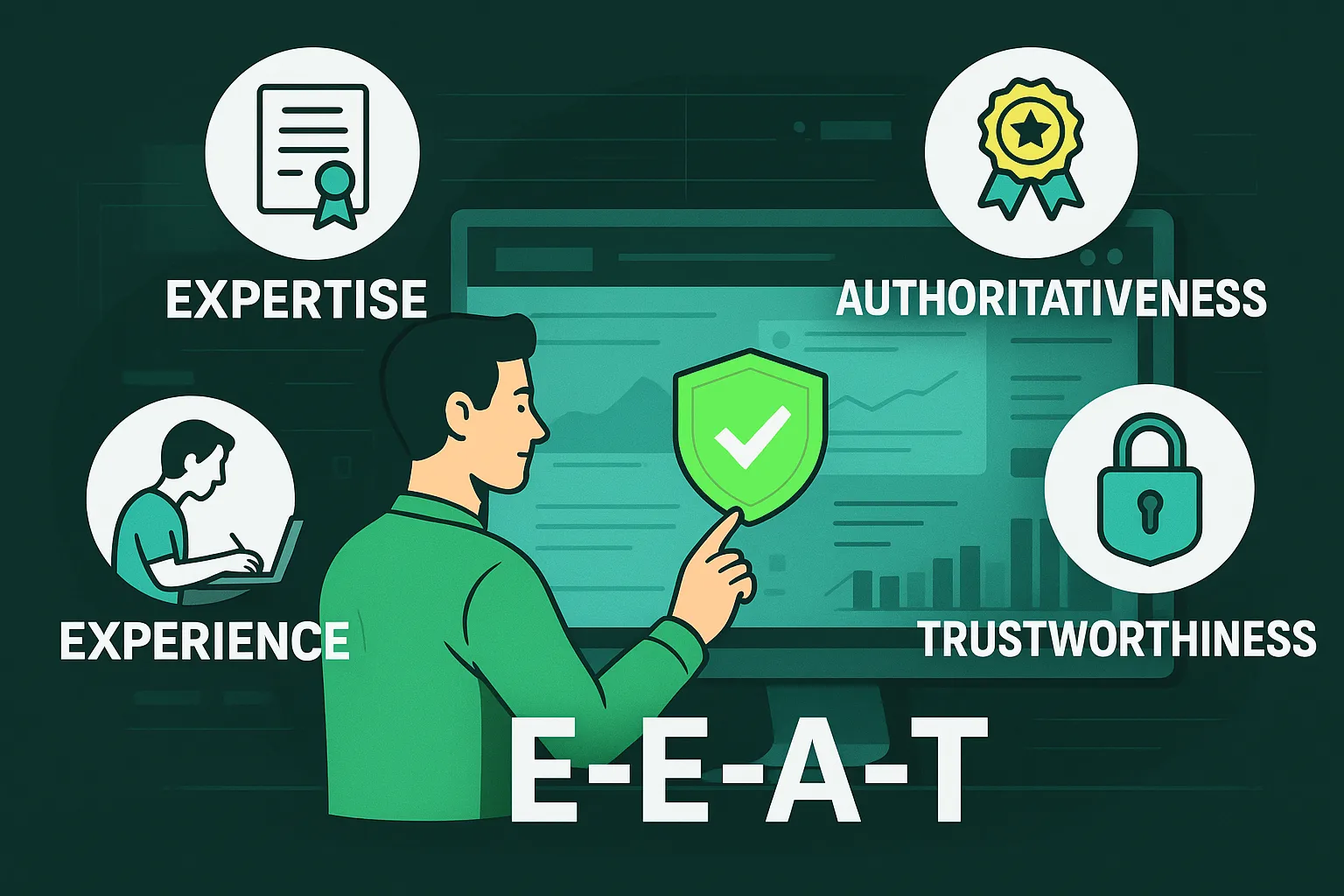
- Brand authority and E-E-A-T: Google wants to show trustworthy sources. If your website demonstrates real experience, testimonials, case studies and concrete data, you have an advantage that generic content cannot buy
- SEO + paid campaigns combined: not as separate channels, but as a unified strategy where SEO builds long-term presence and Ads capture immediate demand
The most expensive mistake companies are making right now
Put simply, they are still measuring the success of their digital marketing solely by organic traffic.
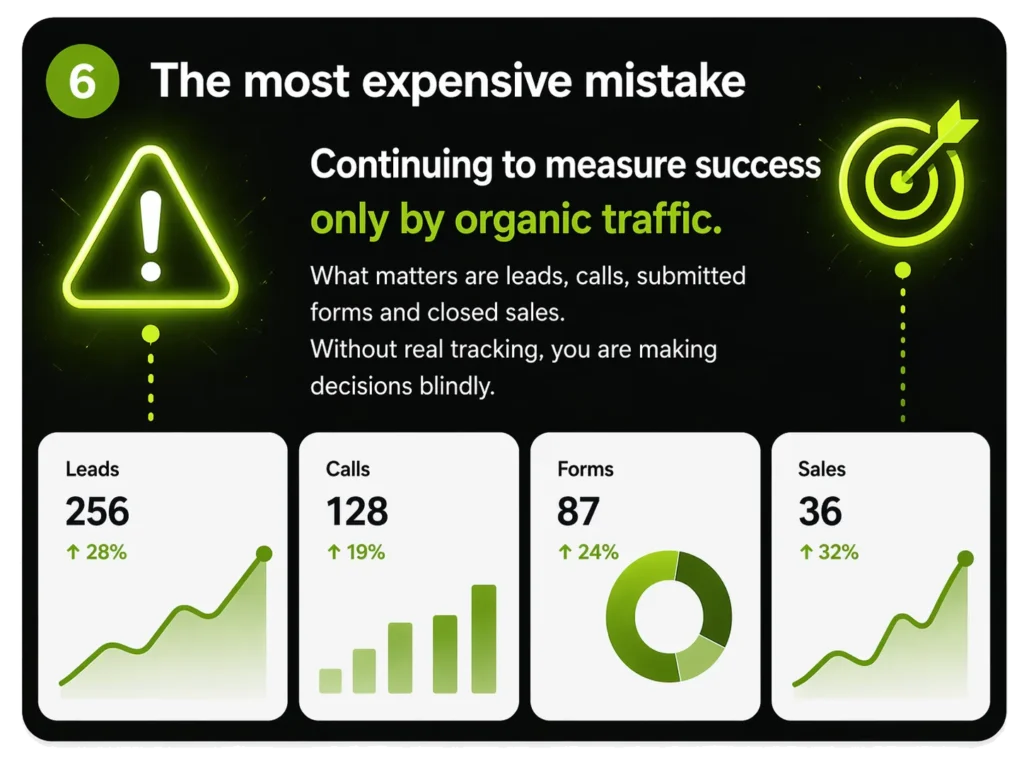
Traffic is a means, not an end. What matters are leads, calls, form submissions and closed sales.
To truly understand that, you need tracking that actually works: tracking every form submission, distinguishing between bot clicks and real calls, identifying which channel is generating business and which is just generating noise.
Without that data, any strategic decision about where to invest your marketing budget is, at best, an educated guess.
What to do if you want to keep growing in this new context
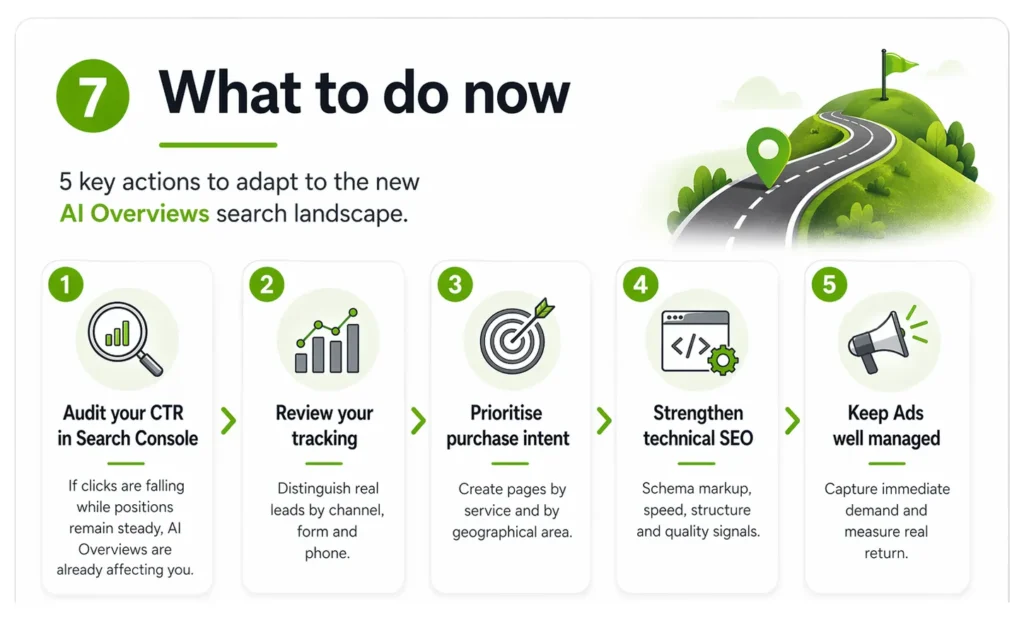
There’s no magic formula, but there is a logical order of priorities:
- Audit your current situation. Go into Google Search Console and check whether your CTR has dropped in recent months while maintaining similar rankings. If so, AI Overviews are already affecting your searches.
- Review your tracking. Do you know how many real leads you receive each month? Can you differentiate those coming from Ads, organic traffic, forms or calls? If the answer is no, that’s your first issue to fix.
- Focus your content on purchase intent. Instead of writing about broad topics, create specific pages for each service and each geographical area you operate in. This type of content withstands AI Overviews much better and converts directly.
- Strengthen your technical SEO. Schema Markup, speed, structure. Every well-implemented technical element is a quality signal that Google values — and it can also help your content be cited within AI Overviews themselves.
- Do not abandon paid campaigns. In an environment where organic traffic for informational queries is declining, well-managed Ads are the most direct way to continue appearing in front of users who are ready to hire. The key is proper segmentation and tracking that measures real return.

And yes, SEO has simply matured, but it remains absolutely essential for any business offering products or services online.
What has died is the easy strategy: publishing generic content, waiting to rank, and collecting traffic without further effort. That no longer works.
What does work — now more than ever — is building a coherent digital presence that is technically solid, conversion-focused and measured with real data. That requires more knowledge, more judgement and more experience than before.
But it also means that those who do it well now have a real competitive advantage over those still doing what worked three years ago.
If you have doubts about how all of this is affecting your business specifically, or you want to understand the real opportunities in your sector and location, we can review it together with no obligation.
Did you find this article useful? We believe it can help cut through the noise you see online. And if you have more specific questions, get in touch — we answer them all.